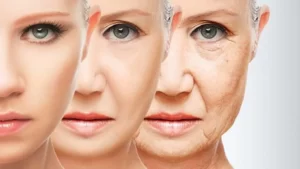
The market for supplements aimed at aesthetics and dermatocosmetics is a gold mine, and people open their purses without question for any product that allegedly makes them look younger and their skin less saggy. It's not difficult to find studies that seem to support these promises, but they should be analyzed critically when there are strong economic interests involved. Not everything that is published is good evidence, and science leaves many doubts about the effectiveness of collagen supplementation. Let's try to understand why.

First of all, what is collagen? It's a protein with structural functions found in connective tissue, including the dermis. There are more than 20 types already identified, but the most common is type I collagen, which accounts for around 80% of that present in the skin. It has a triple helix fibrillar structure which gives it great tensile strength. It is produced by fibroblasts in the dermis, which are also responsible for the synthesis of elastin and hyaluronic acid, which together with collagen are responsible for the elasticity, deformability and hydration of the skin. Everything we want for "healthy" and beautiful skin.
It is true that collagen production capacity decreases as we get older, at an estimated rate of 1.0-1.5% per year from early adulthood. During the menopause, degeneration accelerates, with a reduction in the skin's collagen content of 2% per year. Exposure to environmental factors such as the sun and smoking can further accelerate the reduction in collagen synthesis and degradation. And since the half-life of collagen in the body is long, approximately 15 years, the damage accumulates over time and contributes to progressive degeneration and a decrease in its content in the skin.
The structure of type I collagen is determined by an amino acid sequence Gly-X-Y, where X and Y are often proline, hydroxyproline and lysine, although others may appear occasionally. It does not contain tryptophan, so it is not a complete protein, nor does it have adequate proportions of essential amino acids, which from a quality and biological value point of view does not give it much nutritional interest. It is the post-translational hydroxylation of proline and lysine that allows cross-linking between fibers and the characteristic helical structure of collagen. This reaction is made possible by ascorbic acid (vitamin C), which is essential for protein synthesis and conformation.
As is obvious to anyone who has a basic understanding of physiology, and easy to understand for those who don't, the collagen we ingest is not going to be deposited in the skin or any other tissue. It is a very large protein which, like all proteins, will be digested and assimilated into amino acids or small peptides (di- and tri-peptides) resulting from incomplete digestion, and assimilated via PEPT-1 (small peptide transporter in enterocytes), by paracellular or transcellular transport. The only plausible hypothesis would be that these amino acids or peptides stimulate endogenous collagen synthesis, which seems to be the case in vitro. Hydroxyproline and proline peptides (Pro-ProOH) may promote collagen synthesis by fibroblasts in culture, through mechanisms that are still poorly characterized.
Although mechanistically the effect of supplementation may be possible, biologically it is unlikely. The peptides assimilated via PEPT-1 are mostly digested by intracellular peptidases and released into the portal circulation as amino acids. The basolateral membrane has no transporters of this type. Although Pro-ProOH dipeptides have already been assayed in the circulation, they are probably taken up by paracellular or transcellular routes involving exocytic vesicles. Ingesting 20 g of collagen, 2 to 4 times more than recommended in most products, could raise the concentration of these dipeptides in plasma to around 25 nmol/mL. To put this in perspective, the normal fasting concentration of proline is over 150 nmol/mL. As for the amino acids assimilated in the gastrointestinal tract, they enter the portal circulation where they first pass through the liver, where hydroxyproline is metabolized to oxalate. Therefore, the amount of this amino acid that reaches the peripheral circulation, and which could have an effect on fibroblasts in the skin, will be minimal. It would have to escape metabolization by the enterocytes and liver and be distributed throughout the body to the desired tissue. In this case, the skin. It should be noted that hydroxyproline does not serve as a precursor in collagen synthesis since it is a post-translational modification. It is incorporated as proline and only then hydroxylated by ascorbic acid. Amino acids from collagen digestion serve as precursors just as much as those from any other protein.
Although physiologically there is little support for collagen supplementation, the evidence leaves room for doubt that needs to be clarified with clinical trials. Studies on in vitro cell or animal models have not been transferred to humans. There are several published studies evaluating the efficacy of collagen in dermatological and osteoarticular parameters, but we will focus on the effects on the skin. When we analyze the clinical evidence for a particular food supplement, in this case collagen, we have to do so critically. The vast majority of studies, if not all of them, are sponsored by an industry eager to profit from its product and create a justified need with some kind of scientific support.
For example, a multi-center study of 217 women between the ages of 23 and 69 evaluated the effectiveness of a collagen supplement (Pure Gold Collagen) in attenuating the signs of skin aging. They were recruited by dermatologists in 5 different countries before undergoing an invasive aesthetic procedure - botox, chemical peels, fillers, laser or plastic surgery. For 2 months, they supplemented daily with 50 mL of the product, containing 5 g of hydrolyzed collagen. Of the total sample, 157 showed signs of ageing and wrinkles. At the end of the study, 109 (69%) of them showed visible signs of improvement according to the experts' assessment. The funny thing is that they attributed the effect to collagen when 78% of those who reported improvements had undergone cosmetic procedures precisely to mitigate the signs of ageing. Of the 217 women, 86 showed signs of photoaging and pigmentation. At the end of the intervention with the supplement, 37 had apparently improved (43%). Another way of reading these results is that 57% of the women showed no improvement at all, which doesn't bode well.
However, this study has several obvious problems. Firstly, there is no placebo control group to conclude that the improvements are due to the supplement and not the conditioning of the trial. When someone enters a study, they tend to change their behavior, which alters the outcome. In addition, the supplement is not only made up of collagen, but also vitamin C, vitamin B6, borage oil, glycerol, biotin, hyaluronic acid, N-acetylglucosamine and zinc. It would not be possible to attribute the effect to collagen. But the main limitation is related to the outcomes themselves, based on a subjective assessment of skin characteristics by the team and the participants. Visual scales and perception, which are obviously subject to a great deal of bias when the trial is not double-blinded. The fact that I know I'm taking a supplement, or that the person I'm observing is taking it, conditions the way I evaluate results according to my expectations. Whether I believe the supplement works or not. And even more so when I'm receiving money to conduct the trial, since it was funded by Minerva Research Labs, the patent holder for Pure Gold Collagen.
Another study was conducted and published later with the same product, now double-blinded and with a placebo, in order to evaluate the effectiveness of the supplement on skin elasticity. In other words, the participants didn't know whether they were taking Pure Gold Collagen or flavored water, nor were the evaluators supposed to know which group each individual in the sample was in. And although the sub-group analysis revealed an improvement of 7.5% in the group taking the supplement between day 0 and day 90, there were no differences between groups at the end of the intervention. Furthermore, the choice of placebo is not irrelevant. It is well known that protein intake stimulates endogenous synthesis in an undifferentiated way, including in fibroblasts. It won't be strange if collagen synthesis also increases, regardless of the source. You don't have to compare it with sugar or maltodextrin, but with an equivalent dose of another protein source. No matter how many twists and turns you try to put on the data, you can't say that the supplement has a significant impact on skin elasticity. And once again, the trial was funded by Minerva Research Labs.
It is normal and desirable for industry to fund research, as long as it does not condition the results or the publication of one that is unfavorable to it. Let's imagine the following scenario. The company has 20 trials underway, in different centers and with different samples. You would expect at least one statistically significant but false positive result. That's what p<0.05 means. The probability of a positive but false artefactual result is 1 in 20. If only these are taken to the end and published, we have a biased perception of the evidence. Hence the importance of replication in science. No one wants to be the second to discover something, and everyone is hungry for novelty. But the work of replicating studies is fundamental to solidifying the evidence, and contributes greatly to scientific knowledge.
Efforts have been made to ensure transparency in science, and this has led to the compulsory registration of clinical trials. Trying to ensure that negative results are not "forgotten". All studies with a start record must have an end and a result that, whether favorable or not, is important for knowledge on a subject. Or be interrupted during the course of the study with justification. It should also be clear what the primary and secondary outcomes are for which the study was designed, in order to avoid reporting bias. When authors decide to forget variables whose results were inconvenient. In the best example to illustrate the importance of registration, GSK conducted studies with an antidepressant in young people to assess its effectiveness in controlling the symptoms of the disease and its collaterals. One of several outcomes was suicidal ideation, but as the trials were not registered, it was not known that this was one of the side effects whose risk was being assessed. As there was a significant increase in risk, GSK simply decided to ignore and not report this variable. The case was later made public and the company was penalized for it.
Not all editors of scientific journals are strict about requiring prior registration, following the recommendations of the ICMJE (International Committee of Medical Journals Editors). They accept results from trials that have not been registered, such as those I analyzed earlier with collagen, or that have been registered retrospectively. Only after obtaining the result that matters is the trial entered into the database. Retrospective registries should be banned because, of course, only what is useful will be registered. The Declaration of Helsinki, which attempts to regulate clinical trials, is clear. "All trials must be registered in a public database before the first subject is recruited". And the journal in which the work is published is relevant. Any unquestionable positive result of a supplement on skin characteristics deserves a Nature or New England Journal of Medicine for its importance. Maybe I'm exaggerating, but in a reputable one. Not Skin Pharmacology and Physiology, number 5120 in the ranking. Where, curiously, all the "positives" have been published. For a fee, some journal will accept the paper without much scrutiny. But not everything that is published is good evidence.
I gave the example of Pure Gold Collagen, but I could talk about others. Like Gelita's Verisol, which also has some sponsored and unregistered studies suggesting positive results in skin elasticity and signs of ageing. These studies were carried out by a team of employees from the company itself, and financed by the company. Without wishing to impugn the suitability of the researchers, these are not independent studies, as good practice dictates, and they all come from the same working group. It will be necessary to replicate the results under comparable conditions so that the data is strengthened to the point where it can be called "evidence". Even if the study is apparently well-designed. Without prior registration, let's imagine that there are 40 Verisol trials being conducted with different samples and by different teams all over the world. And only the two that were positive by chance were published and used as evidence to support the supplement. There is no problem with the study, nor was it necessarily poorly conducted. It's just a statistical artifact, as 1 in 20 will be false positives. The other 38 were simply not reported.
The same problem arises for systematic reviews and meta-analyses on the effectiveness of collagen supplementation. They will always be heavily influenced by publication bias. And although they increase the statistical power of the analysis, they do not mitigate the methodological shortcomings of the studies they include. Bad studies lead to bad meta-analyses and systematic reviews. We have to look at individual studies critically to draw conclusions. When the evidence isn't good, a meta-analysis isn't going to solve the problem. That's not even what they're for.
Collagen supplements are very economically interesting products for industry. Since hydrolysis enhances absorption compared to the native form, they are patentable and profitable. They target one of the modern world's biggest problems. Ageing and the difficulty of dealing with it. We're all getting older, and we're all potential customers. And few have a critical mind or know how to interpret scientific evidence. The market for cosmetic and beauty dietary supplements generates more than 3 billion euros globally, and 53% relates exclusively to skin products such as collagen, although it may have other alleged applications such as nails, hair, and osteoarticular problems. The need exists, the industry offers. Regardless of whether it's effective or not, it's safe and there are no collateral effects to be expected that could have legal implications.
To date, there is no robust evidence of collagen's effectiveness in improving the signs of ageing and sagging skin. It's a trendy supplement, but I don't expect it to be any more than that. In a few years' time, nobody will be talking about it. Or something surprising happens in the meantime and a well-designed, independent study comes out showing clear benefits of supplementation. You may decide that the evidence presented to you is sufficient, and that it doesn't do any harm except to your wallet. That it's worth a try. Go for it. It's your money. "Oh, but there are dermatologists who recommend it". There are also endocrinologists who say that whey contains testosterone. And that if you take it, you'll go straight to hemodialysis. Or doctors recommending a multivitamin when someone says they feel tired. In a "go away, I'm tired too" kind of way. Being a doctor doesn't mean that you're right just because you're right, or that you know how to critically analyze the evidence. Or that, in the midst of clinical activity, you even have time, and end up deluded by all the commercial hype surrounding collagen. "But I tried it and I noticed differences". We also know that a blue sugar pill improves a headache when you expect it, and a red one doesn't. That a supplement that costs 100 euros is more effective than one that costs 10, even when it's exactly the same thing. Expectations influence perception when the result is evaluated by subjective metrics. Personal experience is not evidence. For my part, it's not a supplement I can recommend from what we know today. But I may even change my mind in the future. It depends on what the scientific evidence brings us.